
We have not tested these products. This comparison is reasoned from manufacturer specifications, documentation and warranty terms. How we test
If you buy through a link on this page we may earn a commission. Retailers do not pay for reviews or placement. Prices are shown as bands, never as figures — the live price is at the retailer. As an Amazon Associate I earn from qualifying purchases. How we make money
On this page
The short version
Twelve gigabytes and a wide bus at a price where both are normally impossible.
See at Amazon — Intel Arc B580 (opens in a new tab)The cheapest sixteen-gigabyte card worth owning, if you find it near list price.
See at Amazon — Radeon RX 9060 XT 16GB (opens in a new tab)The safe pick if you want the most mature drivers and the best upscaling on a budget.
See at Amazon — GeForce RTX 5060 (opens in a new tab)The budget end of the graphics market is where the compromises are made deliberately, and where reading the specification carefully pays the most. Two cards at the same price can differ by a factor that decides whether you are still happy with the purchase in four years. If the target is 1440p rather than 1080p, our 1440p GPU roundup covers the tier above this one.
The compromise is almost always memory
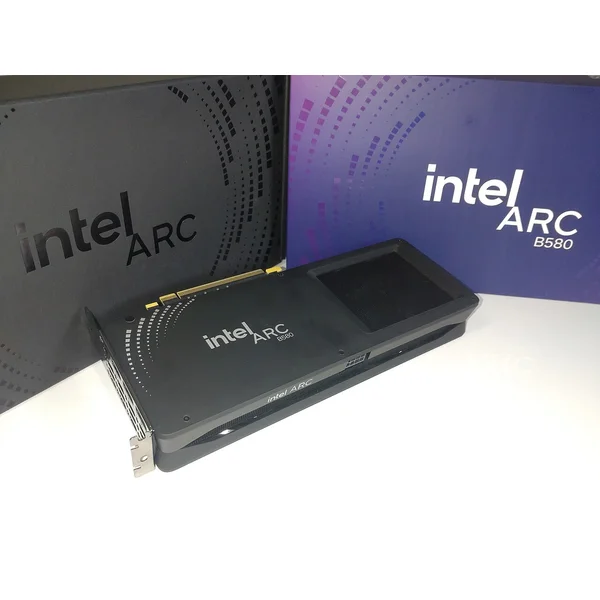
Manufacturers economise where it is least visible on a specification sheet, and memory is the easiest place to do it. A card can be given plenty of shader performance for 1080p and then shipped with barely enough memory to hold the textures those shaders are meant to be drawing. The Intel Arc B580 (at Amazon, opens in a new tab) is the exception worth naming: it pairs a wide memory bus with twelve gigabytes at a price where either alone would be unusual.
The result is a card that reviews well on release, because release-day games fit, and ages badly. This is not hypothetical any more: it is the defining characteristic of the low end of two of the three ranges currently on sale.
If the memory figures above only raise more questions, our VRAM guide explains why capacity matters more than shader count at this end of the market, and the graphics card rankings show which band each of these cards falls in.
When last generation is the better buy
More often at this end than anywhere else. The previous generation is still widely stocked, the discounts are real rather than theoretical, and the generational gains at the budget end have been modest. A previous-generation card one step up the range, bought at a genuine discount, frequently beats a current-generation card bought at list.
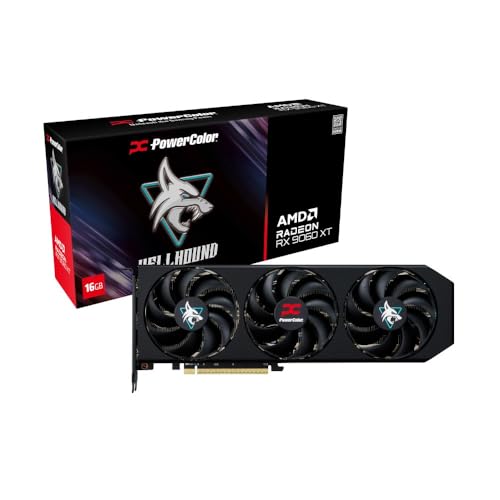
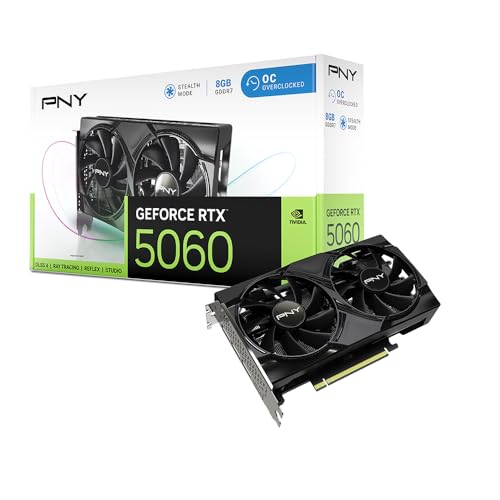
What you give up is the newest upscaling and encoding features. Whether that matters depends entirely on whether you use them. If sixteen gigabytes at this price is the priority, the Radeon RX 9060 XT 16GB (at Amazon, opens in a new tab) is the one to check stock on; if mature drivers and upscaling matter more than the memory figure, the GeForce RTX 5060 (at Amazon, opens in a new tab) is the safer route.
How we chose
No benchmarking was done for this guide, and it would be dishonest to imply otherwise. The reasoning rests on published specifications, on the memory behaviour that decides how these cards age, and on the independent measured results we link from the tier list. Where two cards are close we have said which compromise we would rather live with, which is a judgement you are free to reverse.
Free tool PC Build Compatibility Checker — Will your GPU, PSU, cooler and case actually fit together?The picks
- Band
- $ Budget tier
Intel Arc B580
Twelve gigabytes and a wide bus at a price where both are normally impossible.
- Memory capacity and bus width unheard of at this price
- Comfortable at 1080p ultra rather than merely playable
- Modern media engine handles current codecs properly
- Driver maturity still trails the two established vendors
- Needs a reasonably modern platform to perform as intended
 (opens Amazon in a new tab)
 - Band
- $$ Mid tier
Radeon RX 9060 XT 16GB
The cheapest sixteen-gigabyte card worth owning, if you find it near list price.
- Memory capacity from two tiers above the price
- Low enough power draw for a small case
- Current-generation upscaling and encoding features
- An eight-gigabyte card carries the identical name
- Narrow bus caps it well before 1440p ultra
 (opens Amazon in a new tab)
 - Band
- $ Budget tier
GeForce RTX 5060
The safe pick if you want the most mature drivers and the best upscaling on a budget.
- The most mature driver and upscaling stack available
- Very low power draw suits pre-built and small systems
- Broadest compatibility with older and stranger titles
- Eight gigabytes is thin for a card bought today
- Loses on raw rasterisation to similarly priced rivals
Questions people ask
Is eight gigabytes of VRAM still enough?
For 1080p at high settings in most current games, yes, today. As a purchase you intend to keep for four or five years, it is the specification most likely to end the card useful life before anything else does. Texture quality is the setting people least want to lower, because it costs almost no performance and does more for how a game looks than any other slider. A card that forces you to lower it is a card you will resent, and that is the argument for stretching to twelve gigabytes if the budget can be made to reach.
Should I buy a used card instead?
It is the best value in the market and it carries real risk. You get no warranty, no return route, and no way to know whether the card spent three years in a well-cooled case or in a mining rack. If you buy used, buy from somebody who will let you test it before money changes hands, run something demanding for half an hour and watch the temperatures, and treat any card sold without its original box and invoice as a gamble rather than a bargain.
Do I need a new power supply for a budget card?
Usually not, and this is one of the genuine advantages of buying at this end of the market. The cards here draw modest power and most take a single conventional connector or none at all. What still deserves a check is the age of the supply rather than its rating: capacitors degrade, a supply that was adequate when it was new may not be after eight years, and an old unit failing under load can take other components with it.
Intel Arc B580
Twelve gigabytes and a wide bus at a price where both are normally impossible.

