
We have not tested these products. This comparison is reasoned from manufacturer specifications, documentation and warranty terms. How we test
If you buy through a link on this page we may earn a commission. Retailers do not pay for reviews or placement. Prices are shown as bands, never as figures — the live price is at the retailer. As an Amazon Associate I earn from qualifying purchases. How we make money
On this page
The short version
Two towers and six heat pipes for a price that used to buy a single-tower cooler.
See at Amazon — Thermalright Peerless Assassin 120 SE (opens in a new tab)The best air cooler made, with a fan curve and mounting system to match.
See at Amazon — Noctua NH-D15 G2 (opens in a new tab)The liquid cooler to buy if you are buying one, with a radiator that earns its size.
See at Amazon — Arctic Liquid Freezer III 360 (opens in a new tab)When silence outranks every other consideration and the case has the clearance.
See at Amazon — be quiet! Dark Rock Pro 5 (opens in a new tab)Processor cooling is the part of a build where the expensive answer and the correct answer diverge most often. A good air cooler at a modest price handles nearly everything, and the exceptions are specific enough to name.
What decides cooling performance
Surface area and heat pipes, before anything else. A dual-tower cooler has roughly twice the fin area of a single tower and moves heat away from the base faster. That is most of the difference between an adequate cooler and a good one — it is why the Thermalright Peerless Assassin 120 SE (at Amazon, opens in a new tab) punches so far above its price, and why the Noctua NH-D15 G2 (at Amazon, opens in a new tab) remains the reference at the premium end.
Fan quality, which decides noise more than it decides temperature. Two coolers with similar fin stacks can differ enormously in how unpleasant they are to sit next to.
Mounting pressure, which is the one people never think about and which separates a cooler that performs as reviewed from one that does not. Even pressure across the processor is what gets heat into the base at all.
The case for liquid, honestly stated
A large radiator handles sustained heavy loads from a top-tier processor better than any air cooler, and it moves the heat straight out of the case rather than into it. It also clears the space above the socket, which some builds genuinely need — this is the case the Arctic Liquid Freezer III 360 (at Amazon, opens in a new tab) is built to answer. Our air vs liquid comparison goes through this trade-off in more depth.
Against that: a pump is a moving part with a finite life, the installation is more involved, and for a mainstream processor the temperature difference will not change anything you experience. Our full Peerless Assassin review covers the air-cooler case in detail, and the PC cooling guide covers the rest of a build’s thermal design beyond just the cooler.
Any cooler can only work with the air the case gives it. That starts with a case built for airflow, continues with case fans matched to their positions, and ends with a sensible fan layout.
How we chose
No thermal testing was performed for this guide. It rests on cooler geometry and fin area, on published clearance figures, on manufacturer acoustic specifications, and on the mounting systems as documented. Use the compatibility checker to confirm that a cooler fits your case and processor before ordering.
Free tool PC Build Compatibility Checker — Will your GPU, PSU, cooler and case actually fit together?The picks
 (opens Amazon in a new tab)
 - Band
- $ Budget tier
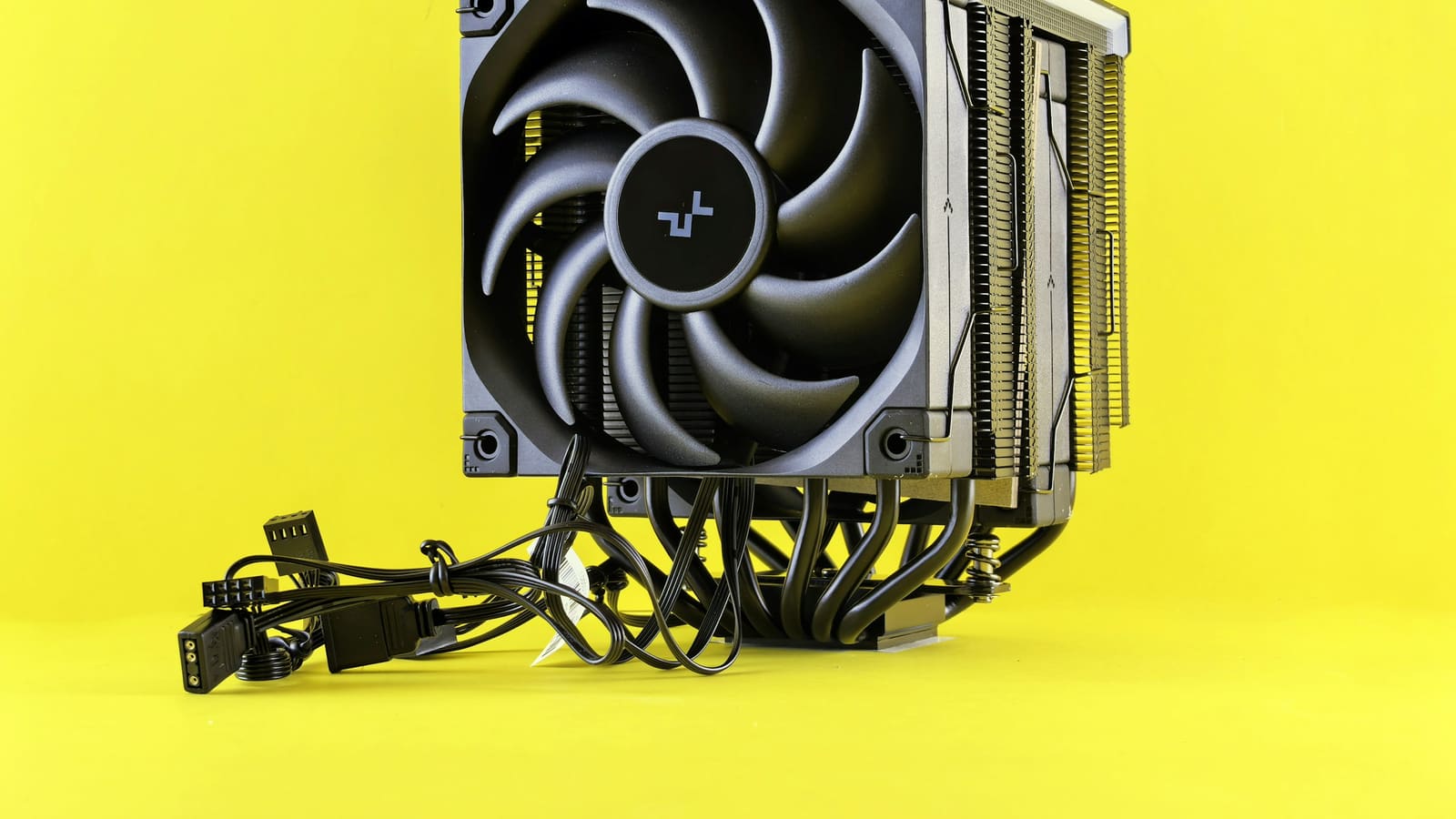
Thermalright Peerless Assassin 120 SE
Two towers and six heat pipes for a price that used to buy a single-tower cooler.
- Handles mainstream processors without breaking a sweat
- Costs a fraction of comparable liquid coolers
- No pump, so nothing to fail in five years
- Tall enough to foul some cases and memory kits
- Fitting it means removing the board in most cases
- Band
- $$$$ Premium tier
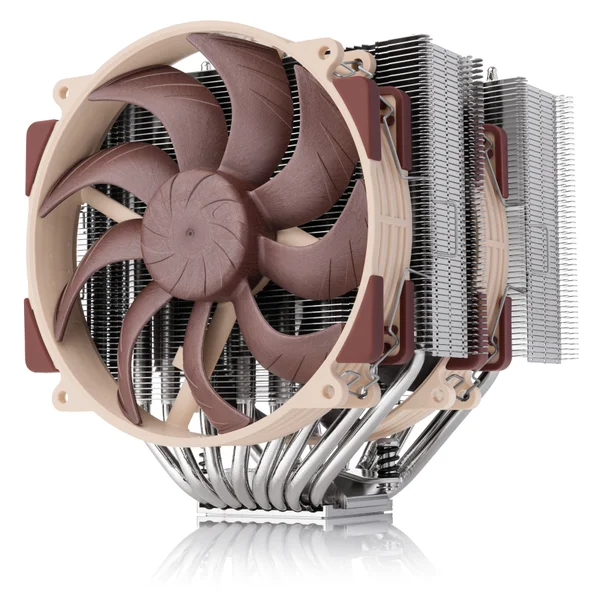
Noctua NH-D15 G2
The best air cooler made, with a fan curve and mounting system to match.
- Cooling performance that rivals large liquid coolers
- Exceptionally quiet across the whole fan curve
- Mounting hardware is the best in the category
- Expensive for an air cooler
- Large enough to require checking every clearance
 (opens Amazon in a new tab)
 - Band
- $$ Mid tier
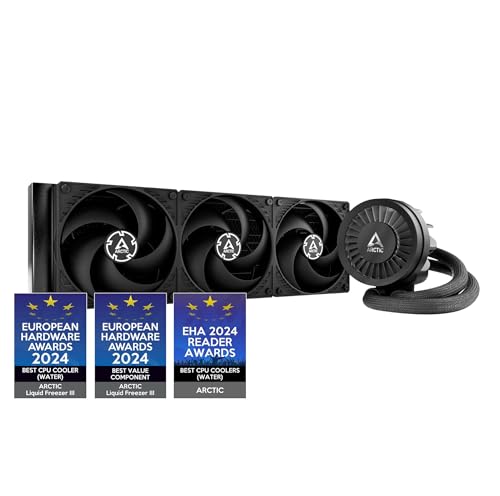
Arctic Liquid Freezer III 360
The liquid cooler to buy if you are buying one, with a radiator that earns its size.
- Handles the highest-power processors comfortably
- Frees the space above the processor entirely
- Priced well below most rivals of its size
- A pump is a moving part that can eventually fail
- Needs a case that takes a large radiator
 (opens Amazon in a new tab)
 - Band
- $$$ Upper-mid tier
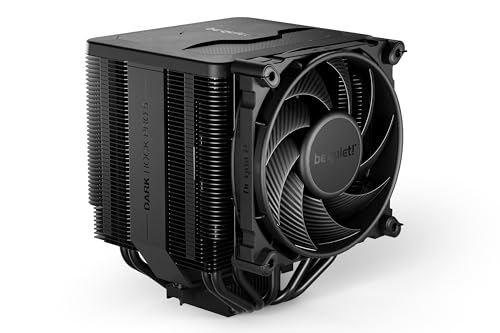
be quiet! Dark Rock Pro 5
When silence outranks every other consideration and the case has the clearance.
- Among the quietest coolers available at any price
- Strong cooling despite the conservative fan curve
- Build quality is genuinely excellent
- Very large, with clearance implications throughout
- Costs premium money for acoustic rather than thermal gains
Questions people ask
Do I need liquid cooling?
For the overwhelming majority of builds, no. A good dual-tower air cooler handles mainstream processors comfortably, costs a fraction as much, and has no pump to fail. The genuine cases for liquid are a top-tier high-power processor being run hard for hours, a case with no vertical room for a tall tower but space for a radiator, or a build where you want the area around the socket clear. Buying liquid because it looks better is a legitimate reason, but it should be named as the reason it is.
Will a big cooler fit my case and memory?
Check two numbers before ordering, because both are easy to get wrong. Your case publishes a maximum cooler height and it is usually accurate; measure it against the cooler own figure rather than assuming a large case has room. Then check whether the cooler overhangs the memory slots and whether your memory has tall heat spreaders, because a tower that fits the case can still leave the first memory slot unusable, and finding that out mid-build is genuinely irritating.
Is the paste in the box good enough?
From a reputable cooler manufacturer, yes, and switching to a boutique compound will change your temperatures by an amount you would struggle to detect. Application matters far more than product: a pea-sized amount in the centre, spread by the pressure of the cooler rather than by hand, gets you essentially all of the available performance. What genuinely does matter is mounting pressure, which means tightening the mounting screws evenly in a cross pattern rather than fully seating one corner first.
Thermalright Peerless Assassin 120 SE
Two towers and six heat pipes for a price that used to buy a single-tower cooler.