
We have not tested these products. This comparison is reasoned from manufacturer specifications, documentation and warranty terms. How we test
If you buy through a link on this page we may earn a commission. Retailers do not pay for reviews or placement. Prices are shown as bands, never as figures — the live price is at the retailer. As an Amazon Associate I earn from qualifying purchases. How we make money
On this page
The short version
Static pressure where it is needed, at a price that makes buying five of them easy.
See at Amazon — Arctic P12 PST (opens in a new tab)The reference fan. Tighter tolerances than anything else, and priced accordingly.
See at Amazon — Noctua NF-A12x25 (opens in a new tab)Thicker than standard, which buys airflow at low speed that thinner fans cannot match.
See at Amazon — Phanteks T30-120 (opens in a new tab)Fans are sold on three numbers that measure different things, and choosing on the wrong one is the most common mistake in the category. A case with poor airflow to begin with limits what any fan can achieve, which is where our guide to airflow-focused cases picks up.
The three specifications
Airflow is the volume moved with nothing in the way. It is the right number for an open case position with no filter behind it.
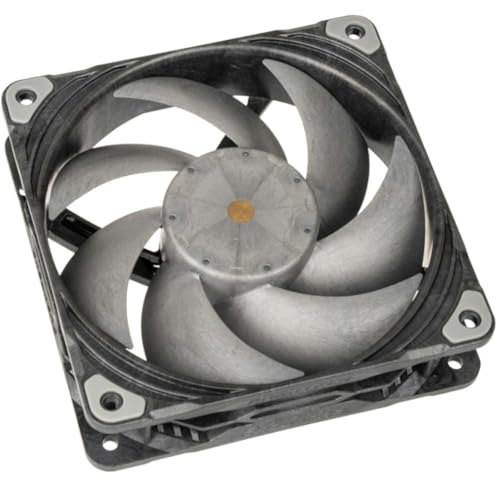
Static pressure is the ability to push air through a resistance. It is the right number for a radiator, a dense dust filter or a tight mesh panel, which is where a fan like the Phanteks T30 (at Amazon, opens in a new tab), with its extra thickness, earns its keep.
Noise is measured at maximum speed, which is not where most fans spend their lives. A fan that is loud at full speed and inaudible at half is a perfectly good fan for a case that never demands full speed.
How many, and where
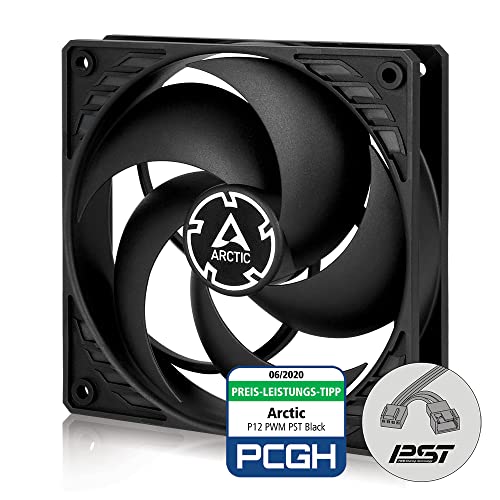
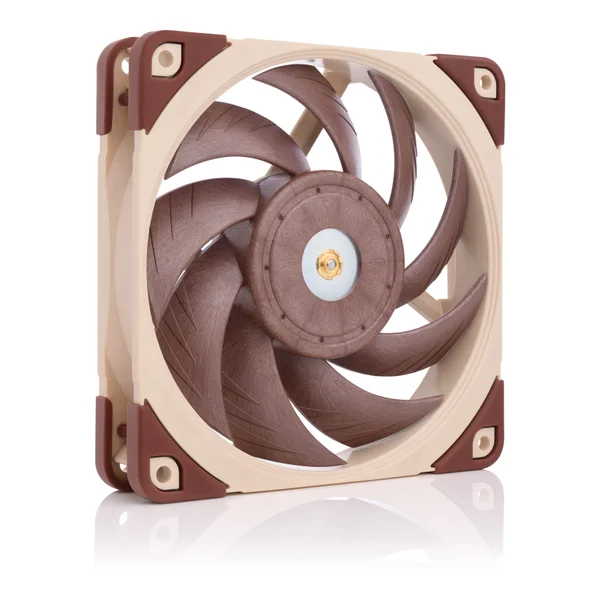
Three is a complete baseline: two drawing in at the front, one pushing out at the back. The Arctic P12 PST (at Amazon, opens in a new tab) is cheap enough to buy that whole set without a second thought, and its daisy-chain connector keeps the cabling tidy across three or more positions. That establishes a path across the components that produce the heat. Where budget is not the constraint, the Noctua NF-A12x25 (at Amazon, opens in a new tab) is the reference point everything else is measured against.
A top exhaust helps if the case supports one, because hot air collects there anyway. Beyond that, more fans mostly add noise, and a fan positioned against the established path costs you temperature rather than gaining it. Our guide to setting up case fans walks through wiring this layout, and the cooling guide covers how fans fit into the rest of the thermal picture. The same airflow feeds the processor, so it is worth planning alongside the CPU cooler itself.
How we chose
No acoustic or thermal measurements were made here. This guide rests on published specifications, blade and frame design, bearing type and warranty length, and on matching each fan to the resistance it will face. The evidence note at the top of this page states the basis plainly.
Free tool PC Build Compatibility Checker — Will your GPU, PSU, cooler and case actually fit together?The picks
 (opens Amazon in a new tab)
 - Band
- $ Budget tier
Arctic P12 PST
Static pressure where it is needed, at a price that makes buying five of them easy.
- Genuine static pressure for filters and radiators
- Cheap enough to buy in quantity
- Daisy-chain connector reduces cable clutter
- Audible at high speed in a quiet room
- Plain appearance with no lighting
- Band
- $$$$ Premium tier
Noctua NF-A12x25
The reference fan. Tighter tolerances than anything else, and priced accordingly.
- Best combination of airflow and quiet available
- Works equally well on radiators and open intakes
- Long warranty and exceptional bearing life
- Costs several times what good fans cost
- Colour scheme is divisive at best
 (opens Amazon in a new tab)
 - Band
- $$$ Upper-mid tier
Phanteks T30-120
Thicker than standard, which buys airflow at low speed that thinner fans cannot match.
- Extra thickness moves more air at lower speed
- Excellent on radiators and behind filters
- Multiple speed modes including a very quiet one
- Will not fit every mounting position
- Expensive, though below the reference option
Questions people ask
What is the difference between airflow and static pressure fans?
Airflow-optimised fans move a large volume of air when there is nothing in the way, which suits an open case position with no filter and nothing behind it. Static pressure fans are designed to push air through a resistance, which is what a radiator, a dense dust filter or a tight mesh panel presents. Using an airflow fan on a radiator produces disappointing results, because the fan stalls against the resistance rather than pushing through it. Most modern general-purpose fans compromise between the two and do both acceptably.
Do more fans always mean better cooling?
No, and past a point they make things worse. Three well-placed fans establishing a clean front-to-back path cool better than six fighting each other. A fan blowing across the path the others established, or an exhaust fan positioned where it pulls the cool intake air straight back out before it reaches anything, actively costs you temperature while adding noise. Establish the path first, then add fans only where they reinforce it.
Are expensive fans worth it?
For noise, yes, measurably. For temperature, much less than the price difference suggests. What the money buys is tighter manufacturing tolerances, better bearings and blade designs that move a given volume of air with less turbulence, and turbulence is what you hear. If your machine is under a desk and you never notice it, cheap competent fans are the rational purchase. If it sits on your desk and the noise annoys you, the premium is buying the thing that actually bothers you.
Arctic P12 PST
Static pressure where it is needed, at a price that makes buying five of them easy.