
We have not tested these products. This comparison is reasoned from manufacturer specifications, documentation and warranty terms. How we test
If you buy through a link on this page we may earn a commission. Retailers do not pay for reviews or placement. Prices are shown as bands, never as figures — the live price is at the retailer. As an Amazon Associate I earn from qualifying purchases. How we make money
On this page
The short version
The light bar case: zero screen glare, zero desk footprint, no positioning to get wrong.
See at Amazon — BenQ ScreenBar Halo (opens in a new tab)The lamp case: real task light for paper, with optics designed to miss the screen.
See at Amazon — BenQ e-Reading Lamp (opens in a new tab)These get compared as competing products. They are better understood as tools for two different jobs that happen to both involve light near a desk.
What each is physically capable of
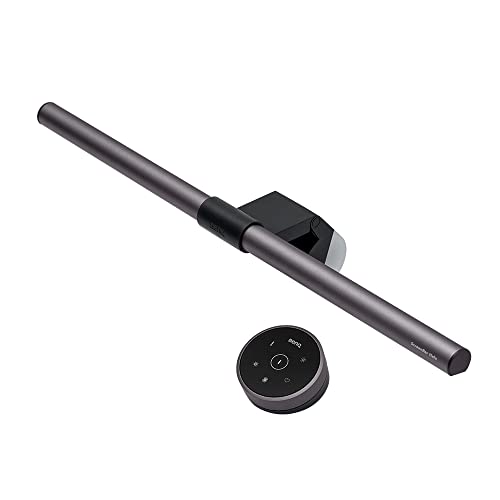
A light bar sits above the screen and throws light forward and down. It cannot glare on the screen, because the screen is behind it. It occupies no desk space. Its output is diffuse and spread across the desk. The ScreenBar Halo (at Amazon, opens in a new tab) is a common example — see our full review for what it does and does not do.
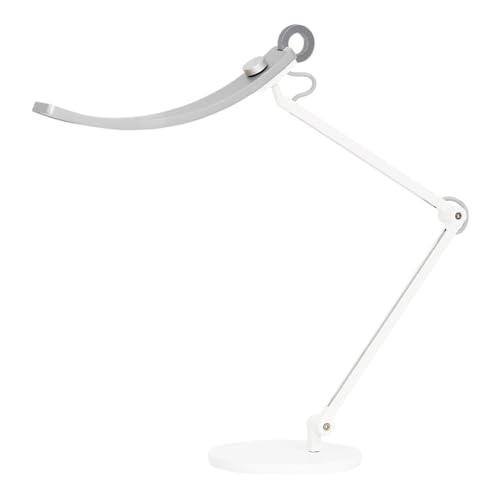
A lamp sits on or beside the desk and directs light where you point it. It can produce a genuinely bright, concentrated pool for reading or handwork. It can also glare on the screen if positioned carelessly, and it occupies surface area. The BenQ e-Reading lamp (at Amazon, opens in a new tab) uses asymmetric optics specifically to avoid that.
The deciding question
Do you handle paper at this desk?
If you work only on screen, the light bar wins clearly. It solves the actual problem — a bright screen in a dim surround — with no positioning skill required and no desk space consumed.
If you read documents, sketch, take notes, or do any handwork, a light bar cannot light that adequately. Its throw is too diffuse. You will end up buying a lamp as well.
The space argument
On a small desk this can decide it on its own. A light bar’s footprint is zero; a lamp’s base and arm can occupy a meaningful fraction of a shallow desk, and it occupies exactly the area near the screen where you least want an obstruction.
The glare argument
A light bar cannot glare on your screen — that is a geometric property, not a feature. A lamp can, and avoiding it requires either asymmetric optics or careful placement. That makes the bar the more forgiving purchase.
The picks
 (opens Amazon in a new tab)
 - Band
- $$ Mid tier
BenQ ScreenBar Halo
The light bar case: zero screen glare, zero desk footprint, no positioning to get wrong.
- Cannot glare on the screen
- Uses no desk space
- Nothing to position
- Poor task light for paper
- Fit depends on bezel depth
 (opens Amazon in a new tab)
 - Band
- $$$$ Premium tier
BenQ e-Reading Lamp
The lamp case: real task light for paper, with optics designed to miss the screen.
- Genuine task lighting for paper
- Wide asymmetric coverage
- Adjustable position
- Occupies desk space
- Needs careful placement
Questions people ask
Can I use both?
Yes, and it is a sensible combination if you do mixed work. The light bar handles the constant ambient lift for screen work, and the lamp gets switched on only when you need directed light on paper. Because the bar is doing the baseline job, the lamp can be smaller and cheaper than it would otherwise need to be.
Which is better value?
For pure screen work, the light bar, because it does the one relevant job without any positioning skill required and takes no space. For mixed work, a lamp is better value because a light bar simply cannot light a document adequately, so buying one leaves you still needing a lamp.