
We have not tested these products. This comparison is reasoned from manufacturer specifications, documentation and warranty terms. How we test
If you buy through a link on this page we may earn a commission. Retailers do not pay for reviews or placement. Prices are shown as bands, never as figures — the live price is at the retailer. As an Amazon Associate I earn from qualifying purchases. How we make money
On this page
The short version
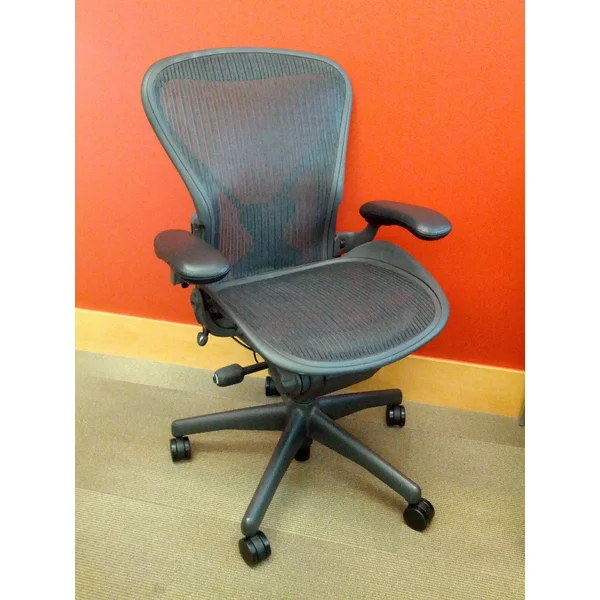
The case for mesh: no compression failure, and it stays cool through a long day.
See at Amazon — Herman Miller Aeron (opens in a new tab)The case for a foam seat: softer on contact, under a mesh back that stays cool.
See at Amazon — Branch Ergonomic Chair Pro (opens in a new tab)This choice is usually presented as a comfort preference. It is substantially a durability decision with a comfort side effect. For the fuller adjustment picture beyond mesh versus foam, see our ergonomic chair buying guide.
The durability difference is real and one-directional
Foam compresses. Under daily use it takes a permanent set, generally within two to four years depending on density and load. Once it has, the chair’s support geometry is gone and there is no repair — you can replace the seat pad on some chairs, and on most you cannot.
Tensioned mesh has no equivalent failure. It can slacken and it can tear, but it does not gradually and irreversibly flatten in the way foam does.
If the chair is going to see full-time use for years, this is the deciding factor and everything else is secondary. The Aeron (at Amazon, opens in a new tab) is the reference point for this kind of mesh durability — see our full review for how it holds up over time. Our ergonomic office chair picks weigh the same durability argument alongside adjustment range.
The thermal difference is also real
Mesh is open, so body heat and moisture pass through it. Foam is closed, so they do not. In a warm room over a long day this is very noticeable and mesh wins clearly.
In a cold room, the same property works against you. A mesh chair provides no insulation whatsoever, and people in unheated home offices genuinely do notice.
Where foam legitimately wins
First-contact comfort. Foam yields immediately; tensioned mesh does not. Some people never adapt to a suspension seat, and telling them they are wrong is not useful — if a mesh seat is uncomfortable to you after a fortnight, it will probably stay uncomfortable.
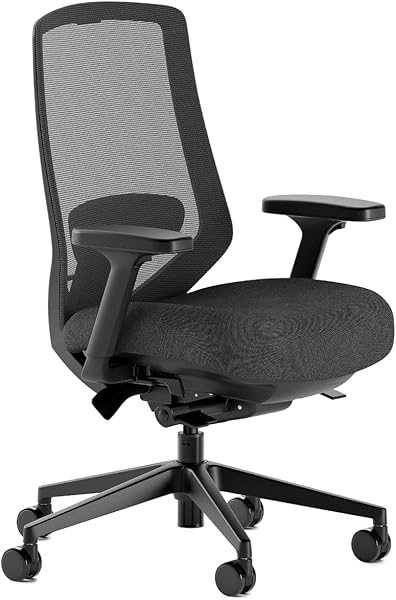
Foam is also usually cheaper for a given level of adjustment, because tensioning a suspension surface properly is expensive to manufacture. The Branch Ergonomic Chair Pro (at Amazon, opens in a new tab), with a foam seat under a mesh back, is a common example of that trade-off.
The picks
.jpg)
- Band
- $$$$ Premium tier
Herman Miller Aeron
The case for mesh: no compression failure, and it stays cool through a long day.
- No permanent compression
- Stays cool over long sessions
- Holds tension for years
- Cold in an unheated room
- Firm initial feel
 (opens Amazon in a new tab)
 - Band
- $$$ Upper-mid tier
Branch Ergonomic Chair Pro
The case for a foam seat: softer on contact, under a mesh back that stays cool.
- Foam seat is softer at first contact
- Mesh back breathes
- Usually cheaper for equivalent adjustment
- Seat foam compresses permanently over time
- Seat retains heat in summer
Questions people ask
Does mesh really last longer?
For the seat, yes, in a specific sense: a tensioned mesh surface has no compression failure mode, whereas foam always eventually takes a permanent set under daily use. Mesh can fail in other ways — the tension can slacken, and a torn panel is not usually repairable — but the gradual, unfixable sag that ends most foam chairs does not happen.
Is a mesh back with a foam seat a good compromise?
It is the most common configuration on the market and it is a reasonable one. The back is where heat builds up most, so mesh there addresses the main thermal complaint, while a foam seat gives the softer initial contact many people prefer. You still get foam compression in the seat, which is where most of the load is, so it does not solve the durability question.