
We have not tested these products. This comparison is reasoned from manufacturer specifications, documentation and warranty terms. How we test
On this page
Desk lighting is three separate jobs, and doing one of them well while ignoring the others is why some setups still feel wrong despite an expensive lamp.
The three layers
Ambient — the general light level in the room. Ceiling fixtures, daylight. This sets the baseline your eyes adapt to.
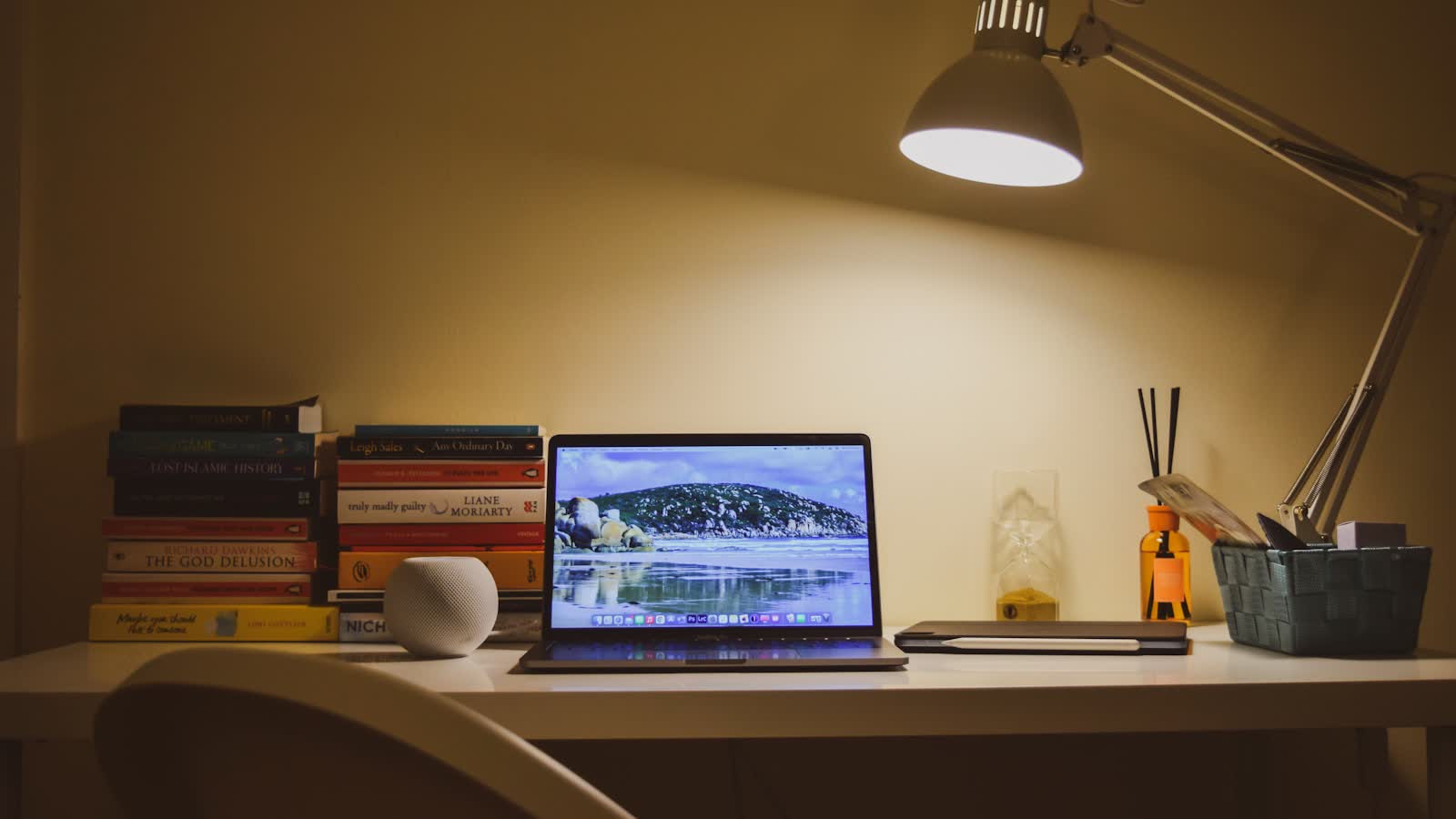
Task — directed light where you do close work. Only genuinely needed if you handle paper or do detailed handwork; a screen lights itself. The desk lamps we recommend are chosen for keeping light off the screen, and whether you need a lamp or a light bar at all comes down to the paper question.
Bias — light behind the monitor, aimed at the wall. Reduces the contrast between a bright screen and the dark surface behind it.
Most home desks have too little ambient and no bias at all. A monitor light bar is the usual fix for the first; the light bar roundup explains why its position is the whole point.
The ratio, not the brightness
The number that matters is the ratio between your screen and its surroundings, not the absolute output of anything. A comfortable target is a surround somewhere around a third to two-thirds as bright as the screen. Far darker and your pupils fight the contrast; far brighter and the screen looks washed out.
This is why “turn the lights up” and “turn the screen down” are both valid fixes for the same problem, and why the right one depends on the time of day.
Bias lighting is the cheapest win
A USB LED strip on the back of the monitor, aimed at the wall, costs very little and addresses the largest dark area in your field of view during evening work. Use a neutral white, roughly 6500K, so it does not tint your perception of colour on screen.
Placement rules
- Nothing that can reflect off the screen. Check with a black image on screen.
- No bare bulb in your peripheral vision.
- Light coming from the side rather than directly behind you, so your own shadow does not fall on the desk.
- Windows to the side rather than in front of or behind the screen. A window behind the monitor is the worst case.
Questions people ask
What is bias lighting?
Light placed behind the monitor, aimed at the wall. It raises the brightness of the surface directly behind the screen, which is the single largest dark area in your visual field when working at night. Reducing that contrast is what makes it worthwhile, and it is one of the cheapest changes available — a USB LED strip is enough.
Is a ring light the same as a desk lamp?
No, and using one as a desk lamp is unpleasant. A ring light is designed to put even light on a face for a camera, which means it points at you. That is exactly the wrong direction for desk work, where you want light on the desk and none on the screen or in your eyes.