
We have not tested these products. This comparison is reasoned from manufacturer specifications, documentation and warranty terms. How we test
If you buy through a link on this page we may earn a commission. Retailers do not pay for reviews or placement. Prices are shown as bands, never as figures — the live price is at the retailer. As an Amazon Associate I earn from qualifying purchases. How we make money
On this page
The short version
The vertical mouse that finally fits small and medium hands properly.
See at Amazon — Logitech Lift (opens in a new tab)A cheap, honest way to test whether the vertical angle helps you at all.
See at Amazon — Anker Vertical Ergonomic Mouse (opens in a new tab)Not vertical, but a sculpted shape that solves hand fatigue a different way.
See at Amazon — Logitech MX Master 3S (opens in a new tab)A conventional mouse requires your palm to face the desk. Getting there means rotating your forearm so the two bones cross — pronation — and holding that rotation for hours.
A vertical mouse holds your hand as if you were shaking someone’s hand, which is close to the forearm’s neutral position.
What the evidence supports
Vertical mice reliably reduce measured forearm pronation. That much is a geometric consequence of the shape and it is not really disputed.
Whether reduced pronation reduces your discomfort is less certain. The research shows posture change more consistently than symptom change. That is not a reason to dismiss the category — improving posture is a reasonable thing to do — but it is a reason to be sceptical of confident claims that a vertical mouse will fix pain. If the discomfort is in the shoulder rather than the forearm, a trackball may suit better than a vertical mouse.
The sizing problem this category has
Most vertical mice are large, because the shape is easier to execute at size. The result is that people with small and medium hands often find the whole category uncomfortable, and conclude vertical mice do not suit them when in fact they simply never tried one that fitted.
If a vertical mouse felt wrong to you, check the size you tried before writing off the concept (the ergonomic mouse roundup has the hand-measurement bands). The Logitech Lift (at Amazon, opens in a new tab) is our pick largely because it is the one that fits small and medium hands. And if the problem was never rotation, a large conventional shape like the Logitech MX Master 3S (at Amazon, opens in a new tab) may be the better fix.
The angle varies and it matters
“Vertical” ranges from around 50 degrees to fully 90. A steeper angle is closer to true neutral but makes clicking feel less controlled and increases the tendency to lift the whole mouse when moving it. Somewhere in the 55 to 65 degree range is where most people land.
The picks
 (opens Amazon in a new tab)
 - Band
- $$ Mid tier
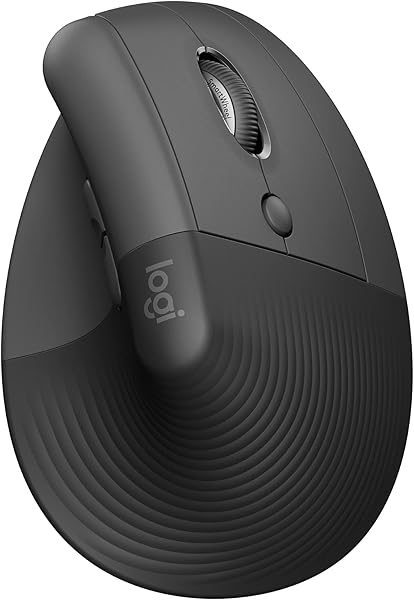
Logitech Lift
The vertical mouse that finally fits small and medium hands properly.
- Correct size for most hands
- Quiet switches
- Solid tracking and build
- Too small for large hands
- Fewer buttons than a full-size mouse
 (opens Amazon in a new tab)
 - Band
- $ Budget tier
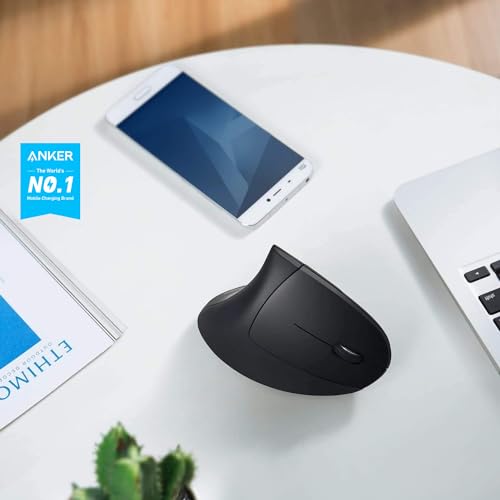
Anker Vertical Ergonomic Mouse
A cheap, honest way to test whether the vertical angle helps you at all.
- Low cost of experiment
- Real 57-degree vertical angle
- Easy to find
- Sensor is basic
- Build quality reflects the price

- Band
- $$ Mid tier
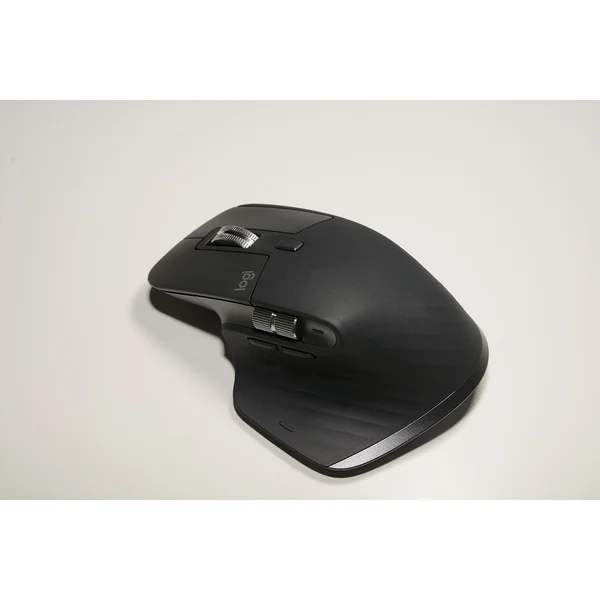
Logitech MX Master 3S
Not vertical, but a sculpted shape that solves hand fatigue a different way.
- Excellent palm support
- No adaptation needed
- Best-in-class scrolling
- Does not address pronation
- Large
Questions people ask
Is a vertical mouse actually better for you?
It reduces forearm pronation, which is a real and measurable difference in posture. Whether that reduces your symptoms depends on whether pronation was contributing to them. Studies on vertical mice show posture improvements more consistently than they show symptom improvements, so treat it as a mechanically sensible change rather than a guaranteed fix.
How long does adaptation take?
A few days to a week for most people. The change is smaller than switching to a split keyboard because your finger positions are broadly similar. What takes longest is fine precision work — expect to be slightly less accurate for the first few days, particularly in design or CAD applications.
Logitech Lift
The vertical mouse that finally fits small and medium hands properly.