

We have not tested these products. This comparison is reasoned from manufacturer specifications, documentation and warranty terms. How we test
If you buy through a link on this page we may earn a commission. Retailers do not pay for reviews or placement. Prices are shown as bands, never as figures — the live price is at the retailer. As an Amazon Associate I earn from qualifying purchases. How we make money
On this page
The short version
The adjustment range and the warranty are what you are buying, and both hold up.
See at Amazon — Herman Miller Aeron (opens in a new tab)Most of the adjustment that matters, at a price that does not require a spreadsheet.
See at Amazon — Steelcase Series 1 (opens in a new tab)The cheapest chair here with five-way armrests and a real lumbar adjustment.
See at Amazon — Branch Ergonomic Chair Pro (opens in a new tab)A chair is the one piece of desk equipment where the price difference buys something you can measure: how many axes it adjusts in, and how long it keeps working. Everything else — the mesh pattern, the brand story, the colour options — is noise. The chair buying guide starts from your measurements rather than from the chair.
The three adjustments that matter
Seat height is non-negotiable and every chair has it. Set it so your feet are flat on the floor and your thighs run roughly parallel to it. If the chair cannot go low enough, you will perch on the front edge all day; if it cannot go high enough, your knees end up above your hips and your lower back rounds.
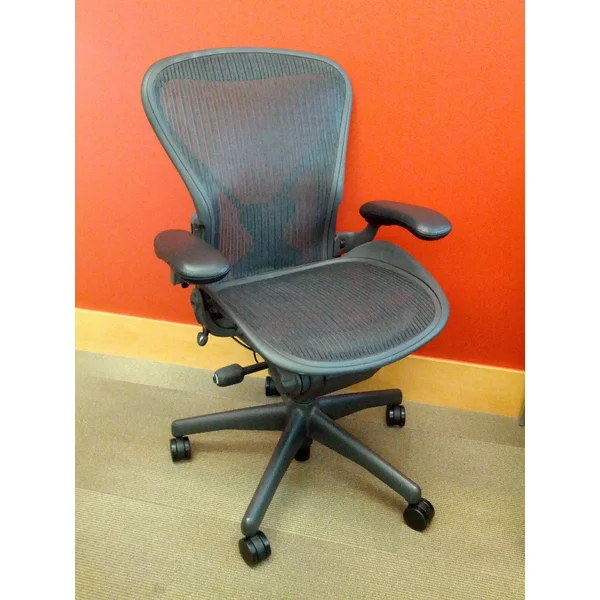
Seat depth is the one most chairs omit and the one people miss most. You want two to three fingers of clearance between the front edge of the seat and the back of your knee. Too deep and the seat edge presses into the back of your legs; too shallow and you lose thigh support entirely. If you are notably tall or short, a chair without seat-depth adjustment will never fit you properly. That, more than anything on a spec sheet, is why the Herman Miller Aeron (at Amazon, opens in a new tab) is our pick; the Aeron review covers who should buy something else.
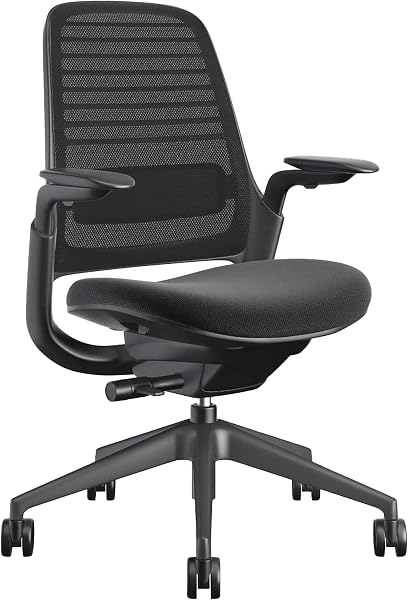
Lumbar height, not just lumbar depth. Plenty of chairs let you push the lumbar support forward. Far fewer let you move it up and down, and the height is what decides whether the support lands in the curve of your spine or somewhere irrelevant above or below it. The Steelcase Series 1 (at Amazon, opens in a new tab) is the value choice on that basis, and it is the same test that decides our picks for lower back pain and the chairs worth buying under $500. Setting all three in the right order takes about five minutes.
What actually wears out
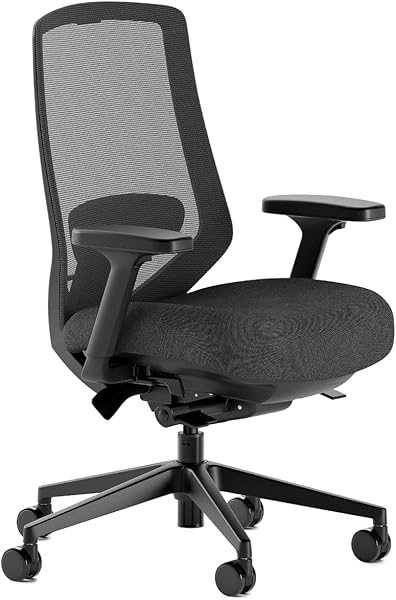
Foam compresses. That is the failure mode for the overwhelming majority of chairs, and it is not repairable — once the foam has taken a set, the support geometry the chair was designed around is gone. Mesh does not have this problem, which is the substantive argument for mesh over comfort preferences — and the trade the Branch Ergonomic Chair Pro (at Amazon, opens in a new tab) makes.
The second failure is gas lift. A cylinder that slowly sinks under load is cheap to replace on a chair designed for it and impossible on one that is not.
How we chose
We compared published adjustment ranges, warranty terms and seat construction across the category, and weighted adjustment range and warranty length most heavily because those are the two variables that decide whether a chair still fits and still works in year five. We have not run these chairs through a cycling rig, and this guide does not claim otherwise.
The picks
.jpg)
- Band
- $$$$ Premium tier
Herman Miller Aeron
The adjustment range and the warranty are what you are buying, and both hold up.
- Twelve-year warranty honoured in practice
- Mesh does not compress like foam
- Three sizes rather than one-size-fits-nobody
- Costs several times a budget chair
- Mesh seat is cold and firm for some
 (opens Amazon in a new tab)
 - Band
- $$$ Upper-mid tier
Steelcase Series 1
Most of the adjustment that matters, at a price that does not require a spreadsheet.
- Weight-responsive recline needs no tuning
- Adjustable lumbar as standard
- Twelve-year warranty at a mid price
- Armrests have less travel than the Aeron
- Headrest costs extra
 (opens Amazon in a new tab)
 - Band
- $$$ Upper-mid tier
Branch Ergonomic Chair Pro
The cheapest chair here with five-way armrests and a real lumbar adjustment.
- Height-adjustable lumbar at this price is unusual
- Armrests move in five directions
- Fourteen points of adjustment
- Foam seat compresses within a couple of years
- Warranty is far shorter
Questions people ask
Is an expensive office chair actually worth it?
The price buys two things: adjustment range and service life. A cheap chair often adjusts in one or two axes, so if your proportions differ from the average it cannot be made to fit. And its foam compresses within two to three years of daily use, at which point the support it did offer is gone. A chair that costs four times as much but lasts twelve years with a warranty behind it is not obviously the more expensive purchase.
Mesh or foam?
Mesh distributes pressure across a suspended surface and does not compress permanently, so it holds its shape for years and runs cool. Foam is warmer, softer at first contact, and conforms more closely — but it takes a permanent set over time, and once it does the chair cannot be restored. Choose mesh for longevity and heat, foam for initial comfort.
What should I adjust first on a new chair?
Seat height first, until your feet are flat and your thighs are roughly parallel to the floor. Then seat depth, leaving two to three fingers of gap between the seat edge and the back of your knee. Then lumbar height, so the support sits in the small of your back rather than above or below it. Armrests last, adjusted so your shoulders stay down when your forearms rest on them.
Herman Miller Aeron
The adjustment range and the warranty are what you are buying, and both hold up.