

We have not tested these products. This comparison is reasoned from manufacturer specifications, documentation and warranty terms. How we test
If you buy through a link on this page we may earn a commission. Retailers do not pay for reviews or placement. Prices are shown as bands, never as figures — the live price is at the retailer. As an Amazon Associate I earn from qualifying purchases. How we make money
On this page
The short version
Keeps height-adjustable lumbar and five-way arms, right at the top of this budget.
See at Amazon — Branch Ergonomic Chair Pro (opens in a new tab)A contract-furniture chair sold to consumers, with the durability that implies.
See at Amazon — HON Ignition 2.0 (opens in a new tab)Few adjustments, but it keeps a headrest and lumbar support at half the price.
See at Amazon — SIHOO M18 (opens in a new tab)The flagship chairs justify their price with adjustment range and a twelve-year warranty. Below that, every chair is a set of decisions about what to keep. The useful question is not “is this chair good” but “which adjustments did it keep, and do I need the ones it dropped?”
What a chair at this price should still do
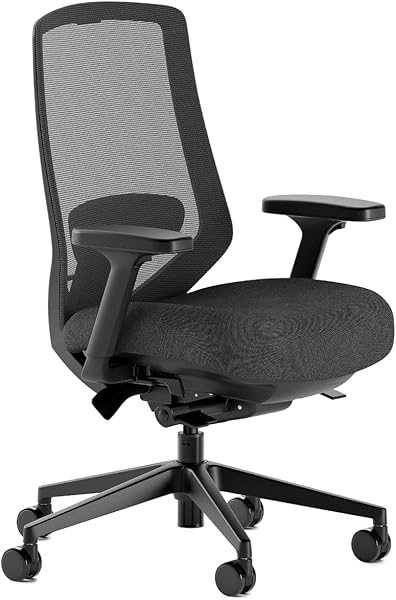
Seat height, obviously. A backrest that reclines and locks. Lumbar support of some kind. Armrests that at least move up and down, because fixed armrests at the wrong height are worse than no armrests at all — they push your shoulders up all day (how to set them takes a minute). The Branch Ergonomic Chair Pro (at Amazon, opens in a new tab) is our pick because it keeps that list intact.
What it is reasonable to lose
Seat depth adjustment is usually the first thing to go, and for many people that is genuinely fine: if you are close to average height, a fixed seat pan will fit. If you are notably tall or short, it will not, and that single missing mechanism should push you up to the chairs in our main roundup. The SIHOO M18 (at Amazon, opens in a new tab) is the clearest case of that trade.
Headrests are the second. A headrest only does anything when you are reclined past about 110 degrees, which is a reading posture rather than a typing one.
The warranty tells you the expected life
A one-year warranty is a manufacturer saying it expects failures in year two. A ten-year warranty on a budget chair — which does exist — is a genuine signal, because honouring it is expensive. Read what the warranty actually covers: frame and mechanism cover is meaningful, fabric and foam cover is rare and valuable.
The picks
 (opens Amazon in a new tab)
 - Band
- $$$ Upper-mid tier
Branch Ergonomic Chair Pro
Keeps height-adjustable lumbar and five-way arms, right at the top of this budget.
- Height-adjustable lumbar retained at this price
- Five-way armrests
- Forward tilt for active sitting
- Foam seat will compress with heavy daily use
- Uses the whole of a 500-dollar budget
 (opens Amazon in a new tab)
 - Band
- $$ Mid tier
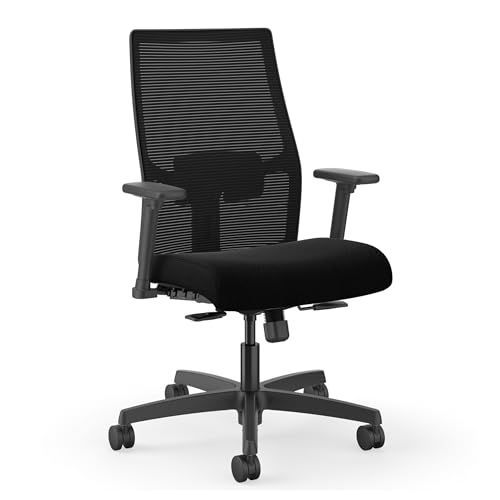
HON Ignition 2.0
A contract-furniture chair sold to consumers, with the durability that implies.
- Built to contract-furniture durability standards
- Mesh back runs cool
- Wide adjustment range for the money
- Distinctly office-supply aesthetics
- Seat foam is firm from new
 (opens Amazon in a new tab)
 - Band
- $ Budget tier
SIHOO M18
Few adjustments, but it keeps a headrest and lumbar support at half the price.
- Headrest and lumbar support at a budget price
- High mesh back supports the shoulders
- Assembles in a few steps
- No seat depth adjustment
- Three-year warranty
Questions people ask
What is the first thing to be cut at this price?
Seat depth adjustment, almost always. It requires a sliding seat pan, which is a mechanism rather than a moulding, and it is the easiest thing to remove without the chair looking cheaper on a spec sheet. Armrest travel is usually the second casualty, dropping from four axes to height-only or to fixed.
Can a chair under $500 last ten years?
A mesh-backed one with a metal frame can. A foam-seated one used eight hours a day generally cannot, because the foam will take a permanent set within two to four years regardless of the frame around it. If longevity is the goal at this price, prioritise mesh and a metal base.
Branch Ergonomic Chair Pro
Keeps height-adjustable lumbar and five-way arms, right at the top of this budget.