

We have not tested these products. This comparison is reasoned from manufacturer specifications, documentation and warranty terms. How we test
If you buy through a link on this page we may earn a commission. Retailers do not pay for reviews or placement. Prices are shown as bands, never as figures — the live price is at the retailer. As an Amazon Associate I earn from qualifying purchases. How we make money
On this page
The short version
The closed answer, and the right default whenever a microphone is live in the room.
See at Amazon — Beyerdynamic DT 770 Pro (opens in a new tab)The open answer: more even, more spacious, and completely unusable near a live microphone.
See at Amazon — Sennheiser HD 560S (opens in a new tab)The difference is a physical one with two consequences that pull in opposite directions.
Open
The back of the enclosure is perforated, so the driver works into open air rather than a sealed cavity. That removes the resonances a sealed cup creates, which is why open pairs tend to be more even and more spacious at any given price.
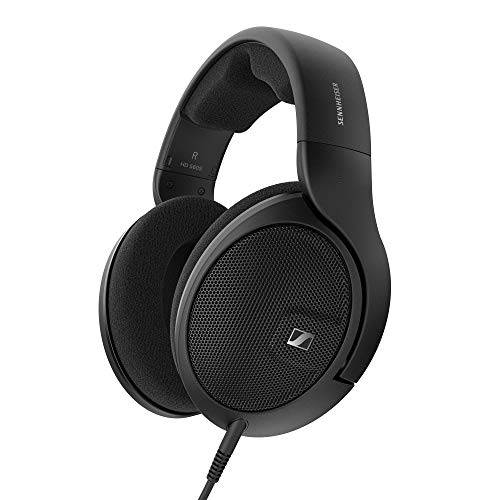
They also leak in both directions. You hear the room, and the room — including your microphone — hears you. The Sennheiser HD 560S (at Amazon, opens in a new tab) is a well-regarded example of that tradeoff.
Closed
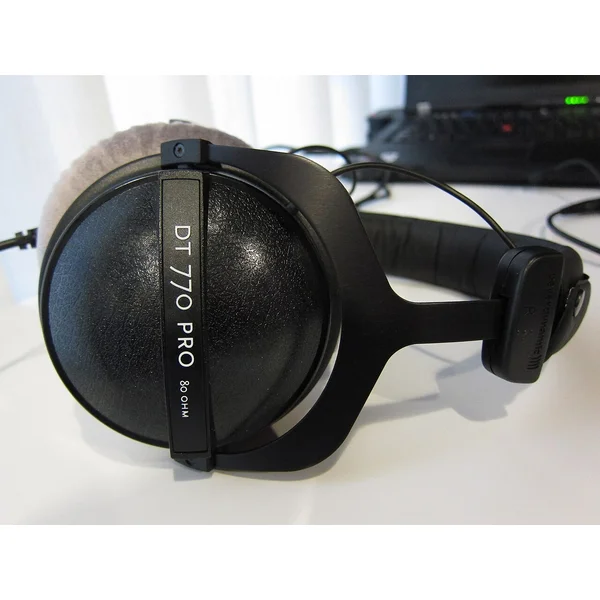
The enclosure is sealed. Sound stays in, room noise stays out, and the trapped air behind the driver produces resonances the designer has to engineer around. That is the harder problem, which is why closed pairs at a given price are more often tonally uneven. The Beyerdynamic DT 770 Pro (at Amazon, opens in a new tab) is the closed pair we pick for streaming anyway, because isolation matters more than evenness whenever a microphone is live. Our closed-back headphones roundup covers more options.
The decision
Is a microphone live while you are listening? Closed, and it is not really a choice. Nothing recording, quiet room, judging balance? Open, and you will hear more for the money. If you are choosing specifically for monitoring rather than general listening, our headphone buying guide for monitoring goes further.
How we compared these
This comparison rests on the acoustic consequences of each enclosure type and on published specifications for the pairs named. No listening tests or measurements were carried out.
The picks

- Band
- $$ Mid tier
Beyerdynamic DT 770 Pro
The closed answer, and the right default whenever a microphone is live in the room.
- Isolation ample to keep leakage out of a microphone
- Comfortable across long sessions
- Wearing parts all replaceable
- Less even than open pairs at the price
- Warmer on the ears over hours
 (opens Amazon in a new tab)
 - Band
- $$ Mid tier
Sennheiser HD 560S
The open answer: more even, more spacious, and completely unusable near a live microphone.
- Even, uncoloured response
- Sense of space makes stereo judgements easier
- Cool and light over long sessions
- Leaks audibly into any nearby microphone
- No isolation from room noise whatsoever
Questions people ask
How much do open headphones actually leak?
Enough that a microphone a hand span from your face will record it, which is the only threshold that matters here. They are not loudspeakers, and somebody across the room may not notice, but a cardioid capsule pointed at your mouth is close enough to pick up a clearly audible version of whatever you are listening to. Once that is in the recording alongside your voice it cannot be separated out afterwards by any process worth the effort.
Can I use open headphones if I turn the volume down?
Sometimes, and it is a compromise with a cost at both ends. Turning them down enough to stop the leak often means turning them down past the point where you can hear what you are monitoring, particularly if you are trying to catch subtle problems. If you must use open headphones near a microphone, keep them quiet, sit further from the capsule than usual, and listen back critically before committing to the arrangement.
Which is better value?
Open, at any given price, because the designer is solving an easier problem. A sealed enclosure traps air behind the driver and creates resonances that take real engineering to control, and that engineering costs money that could have gone into the driver. This is why open pairs tend to sound more even than closed pairs at the same price, and why closed designs that do achieve neutrality are notable for it.