

We have not tested these products. This comparison is reasoned from manufacturer specifications, documentation and warranty terms. How we test
If you buy through a link on this page we may earn a commission. Retailers do not pay for reviews or placement. Prices are shown as bands, never as figures — the live price is at the retailer. As an Amazon Associate I earn from qualifying purchases. How we make money
On this page
Three specifications decide whether headphones suit recording, and one of them is not printed on the box.
1. Enclosure
Closed if a microphone is live in the room, because open designs leak into it. Open if you are mixing and nothing is recording, because they are more even and easier to judge space on.
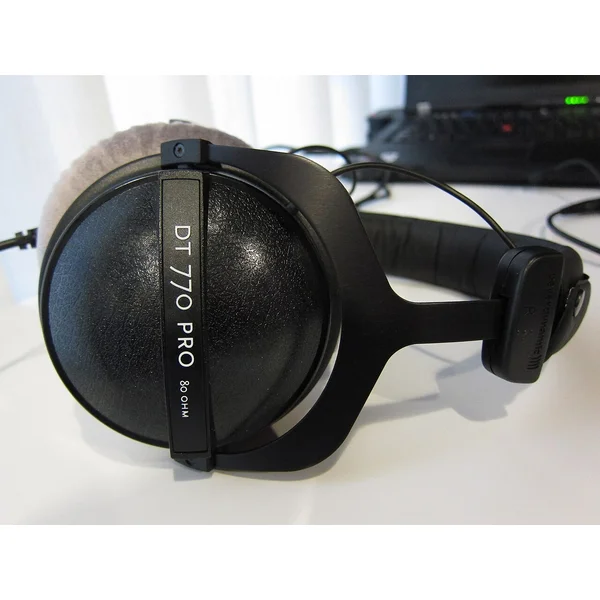
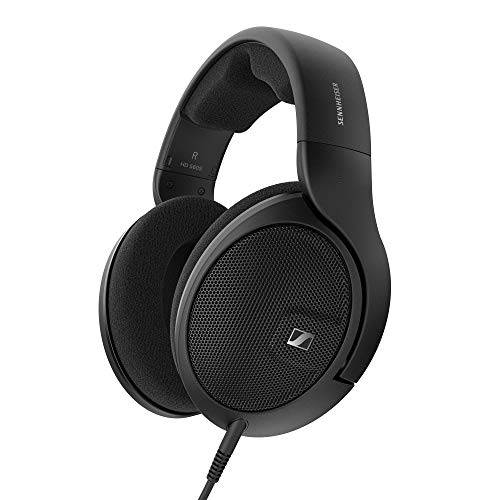
Many people end up owning one of each, which is why the picks here are a closed Beyerdynamic DT 770 Pro (at Amazon, opens in a new tab) and an open Sennheiser HD 560S (at Amazon, opens in a new tab) rather than a ranking. That is a rational outcome rather than an indulgence. For streaming, where a microphone is always live, the closed pairs we recommend are the shorter list.
2. Impedance
Low impedance runs from anything. High impedance needs a real headphone output and sounds quiet and thin without one.
The trap is that several popular models are sold in multiple impedance versions under one name, so the model number alone does not tell you what will arrive, as the DT 770 review spells out.
3. Pads and parts
Pads compress, cables fail. A pair whose parts can be bought separately lasts a decade. A pair whose parts cannot is disposable, and the sound will change as the pads flatten whether you replace them or not.
How we assessed these
This guide rests on published impedance and driver specifications, enclosure type, pad materials and parts availability. No listening tests or measurements were carried out, and the evidence note at the top of the page says so.
What we recommend

- Band
- $$ Mid tier
Beyerdynamic DT 770 Pro
The default recording headphone: closed, comfortable, repairable, widely understood.
- Comfortable for genuinely long sessions
- Every wearing part replaceable
- Isolation ample for recording with audio playing
- Bright treble is not to everyone taste
- Sold in several impedance versions
 (opens Amazon in a new tab)
 - Band
- $$ Mid tier
Sennheiser HD 560S
The open pair to own alongside, for the mixing and checking a closed pair makes harder.
- Notably even and uncoloured response
- Light and comfortable for long listening
- Easy to drive from an interface
- Leaks freely into any nearby microphone
- No isolation from room noise at all
Questions people ask
What does impedance mean in practice?
It describes how much the headphones resist the current driving them, and practically it decides what you can plug them into. Low-impedance pairs run happily from a phone or a laptop socket. High-impedance versions need more voltage than those can supply and will sound quiet and thin without a proper headphone output. Since many studio headphones are sold in several impedance versions under the same model name, check which one a listing is offering before ordering.
Do frequency response numbers matter?
The range quoted on the box is close to meaningless, because it says nothing about how even the response is across that range. A pair claiming five hertz to forty kilohertz can be wildly uneven within the range that actually matters, and human hearing does not extend to either extreme anyway. What matters is the shape of the response, which manufacturers rarely publish usefully, so independent measurements are more informative than any specification sheet.
Are gaming headsets suitable for recording?
For listening, some are perfectly decent. As a recording solution the problem is usually the attached microphone, which sits on a boom near your cheek rather than in front of your mouth, is typically a small, cheap capsule, and gives you no control over gain or position. A separate microphone and a decent pair of closed headphones will outperform any headset at a similar total price, at the cost of having two objects instead of one.