
We have not tested these products. This comparison is reasoned from manufacturer specifications, documentation and warranty terms. How we test
If you buy through a link on this page we may earn a commission. Retailers do not pay for reviews or placement. Prices are shown as bands, never as figures — the live price is at the retailer. As an Amazon Associate I earn from qualifying purchases. How we make money
On this page
The short version
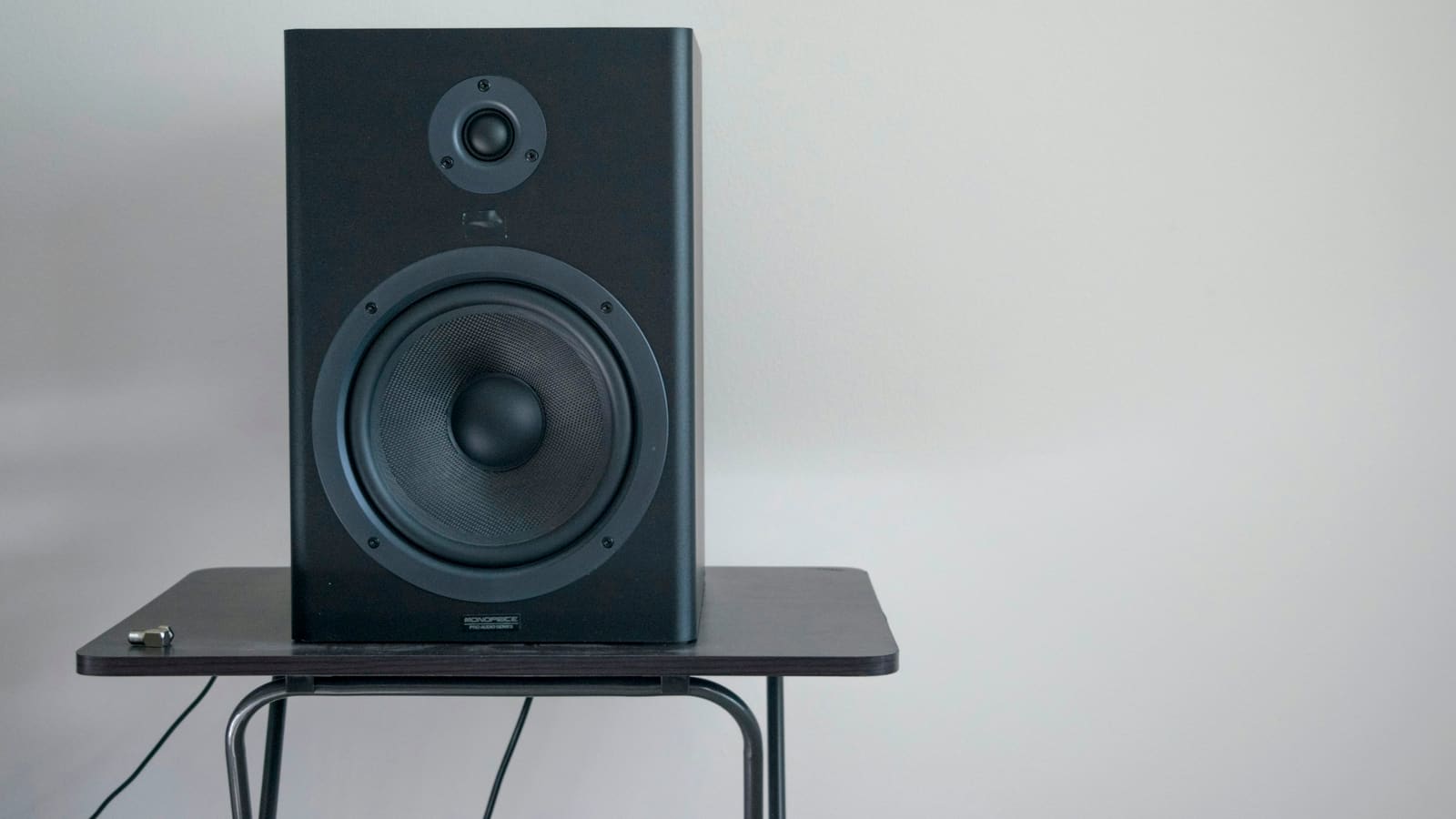
More bass control and more usable output than the price has any right to provide.
See at Amazon — Kali Audio LP-6 V2 (opens in a new tab)Unforgiving in the way a monitor should be, which is exactly why people keep buying them.
See at Amazon — Yamaha HS5 (opens in a new tab)Small enough for a crowded desk and honest enough to be worth using.
See at Amazon — PreSonus Eris 3.5 (opens in a new tab)Near-field monitors sit on a desk about an arm’s length away, so you hear far more of the speaker and far less of the room than you would across a living room. In a small space that is the whole point.
Buy smaller than you want to
The instinct is to buy the largest pair the budget allows. In a small room that is usually the wrong call.
A bigger driver produces more low frequency, and low frequency is what an untreated room mishandles. It gathers in corners and along walls and produces peaks and dips that belong to the room rather than to the recording. A smaller pair that produces less of it gives you a more honest picture.
The Kali Audio LP-6 V2 (at Amazon, opens in a new tab) is our pick with a little space behind the desk; the PreSonus Eris 3.5 (at Amazon, opens in a new tab) is the pair for a desk with none.
What monitors are for
They are not for enjoying music. A good monitor is unflattering: it tells you the sibilance is harsh and the low end is muddy and the room is ringing. That is the service it provides, and the Yamaha HS5 (at Amazon, opens in a new tab) has built a reputation on exactly that.
Speakers that make everything sound pleasant are hiding exactly the problems you bought them to find. While a microphone is live, closed-back headphones do the same job without leaking into it, which is the requirement our streaming headphone guide starts from.
How we chose
No listening tests or measurements were carried out. This guide rests on published driver sizes and frequency response, on cabinet and port design, and on how each behaves against the constraints of a small untreated room.
The picks
 (opens Amazon in a new tab)
 - Band
- $$ Mid tier
Kali Audio LP-6 V2
More bass control and more usable output than the price has any right to provide.
- Genuinely even response for the price
- Boundary compensation switches for wall placement
- Enough output for a room of any normal size
- Physically large for a small desk
- Needs space behind for the port to work
 (opens Amazon in a new tab)
 - Band
- $$$ Upper-mid tier
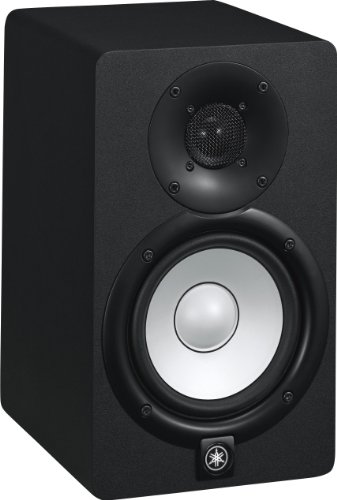
Yamaha HS5
Unforgiving in the way a monitor should be, which is exactly why people keep buying them.
- Reveals problems other speakers politely hide
- Compact enough for a genuinely small desk
- Room compensation controls on the back
- Limited low end without a subwoofer
- Unflattering with casual listening material
 (opens Amazon in a new tab)
 - Band
- $ Budget tier
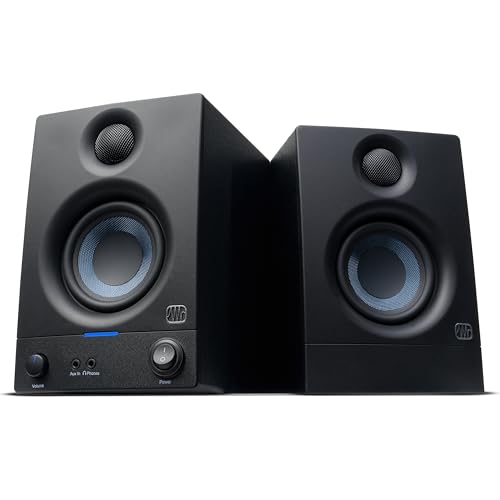
PreSonus Eris 3.5
Small enough for a crowded desk and honest enough to be worth using.
- Fits desks where nothing larger will
- Front-facing controls and inputs
- Cheapest entry into real monitoring
- Very limited low end from a small driver
- Runs out of headroom in a larger room
Questions people ask
What size monitors should I buy?
Smaller than you think, in almost every home room. A larger driver produces more low frequency, and low frequency is exactly what a small untreated room handles worst: it builds up in corners and along walls and produces peaks and nulls that have nothing to do with the recording. A pair with a five-inch driver in a small room usually gives you a more truthful picture than a pair with an eight-inch driver overwhelming the same space.
Do I need acoustic treatment?
To get the full benefit, yes, and the good news is that the cheapest treatment addresses the biggest problem. Absorption at the first reflection points on the side walls, and something soft in the corners behind the speakers, will do more than a more expensive pair of speakers in an untreated room. If treatment is impossible, position carefully, use the boundary compensation switches on the back, and do your final checking on headphones.
Should I use speakers or headphones?
Both, for different jobs, and it is not really a competition. Speakers give you a sense of space and stereo image that headphones cannot, and they let you work without something clamped to your head. Headphones ignore the room entirely, which in a small untreated space is a substantial advantage, and they are essential while recording anyway to stop speaker output leaking into the microphone. Check on both before you publish anything.
Kali Audio LP-6 V2
More bass control and more usable output than the price has any right to provide.