
We have not tested these products. This comparison is reasoned from manufacturer specifications, documentation and warranty terms. How we test
If you buy through a link on this page we may earn a commission. Retailers do not pay for reviews or placement. Prices are shown as bands, never as figures — the live price is at the retailer. As an Amazon Associate I earn from qualifying purchases. How we make money
On this page
The short version
The closest a closed design comes to neutral at this price, and comfortable with it.
See at Amazon — AKG K371 (opens in a new tab)Comfortable enough to forget you are wearing them, and every worn part is replaceable.
See at Amazon — Beyerdynamic DT 770 Pro (opens in a new tab)Revealing, cheap, and still in daily use in studios that bought them decades ago.
See at Amazon — Sony MDR-7506 (opens in a new tab)A closed-back design seals the enclosure behind the driver. That prevents sound leaking out into your microphone, and it introduces an acoustic problem the designer then has to solve.
What sealing costs
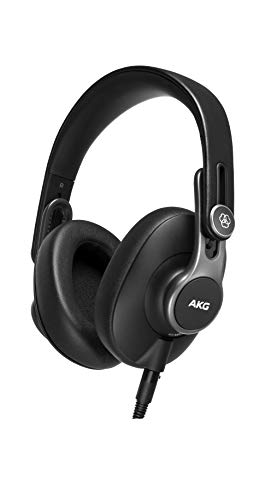
The air trapped behind the driver in a sealed cup resonates, and taming that is the hard part of closed-headphone design. It is why closed pairs are more often tonally uneven than open ones at the same price, and why the ones that get close to neutral are notable for it. The AKG K371 (at Amazon, opens in a new tab) is our pick for exactly that reason.
You also lose the sense of space. Open designs sound like sound around you; closed designs sound like sound in your head.
What sealing buys
Your microphone does not hear your headphones. That is the entire reason this category exists for anyone monitoring while they record, and no amount of tonal excellence in an open pair compensates for it.
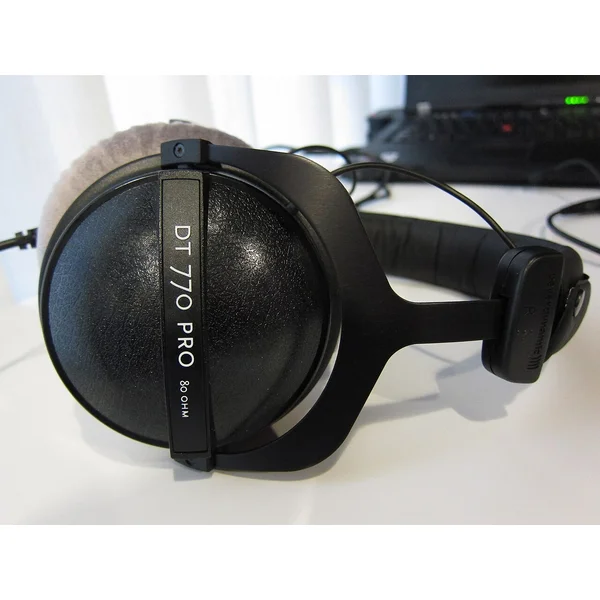
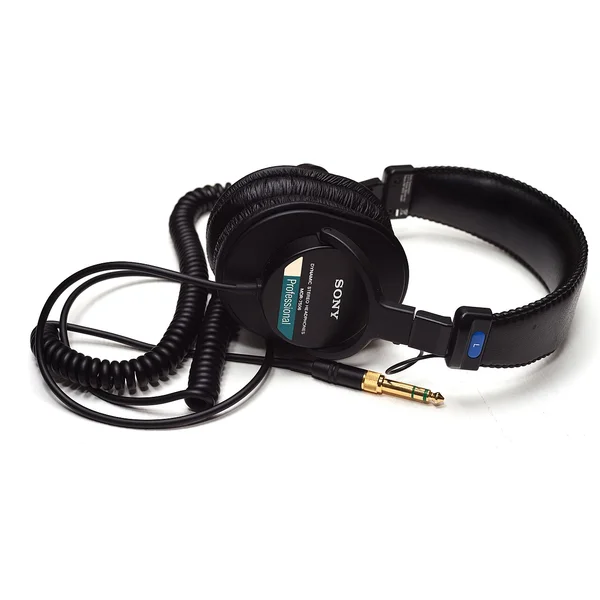
The Beyerdynamic DT 770 Pro (at Amazon, opens in a new tab) is the pair most people end up with for that job, and the DT 770 review covers the impedance trap when ordering. The Sony MDR-7506 (at Amazon, opens in a new tab) is the cheap one that has done the same job in studios for decades. Both also appear in our streaming headphone picks, where comfort over long sessions decides the order.
How we chose
Nothing here was measured or listened to on a controlled system. This guide rests on enclosure design, published impedance and response specifications, pad materials and spare parts availability.
The picks
 (opens Amazon in a new tab)
 - Band
- $$ Mid tier
AKG K371
The closest a closed design comes to neutral at this price, and comfortable with it.
- Unusually even response for a closed design
- Light and comfortable over long sessions
- Detachable cables in three lengths included
- Pads compress faster than the alternatives
- Isolation is good rather than outstanding

- Band
- $$ Mid tier
Beyerdynamic DT 770 Pro
Comfortable enough to forget you are wearing them, and every worn part is replaceable.
- Velour pads stay comfortable for hours
- Full spare parts availability keeps them alive
- Strong isolation for recording with sound playing
- Treble lift can be fatiguing
- Cable is fixed, not detachable

- Band
- $ Budget tier
Sony MDR-7506
Revealing, cheap, and still in daily use in studios that bought them decades ago.
- Reveals sibilance and noise clearly
- Cheap, universally available spare parts
- Folds small and survives everything
- Pads are thin and warm up quickly
- Heavy coiled cable is awkward at a desk
Questions people ask
How much isolation do I actually need?
Enough that your microphone cannot hear what you are listening to, which is a lower bar than blocking out a building site. If you are recording alone with game audio or a co-host in your ears, any competent closed design will manage it at sensible listening volumes. The situation that demands genuinely strong isolation is recording in a room with other noise in it, or monitoring at high volume, both of which push leakage past what a microphone will politely ignore.
Are closed-back headphones worse for mixing?
They are harder to mix on, and the reason is physics rather than quality. Sealing the enclosure creates a small pressurised space behind the driver, which produces resonances that are difficult to eliminate entirely, and it removes the sense of space that makes stereo judgements easier. The best closed designs get impressively close to neutral, but if mixing is the main activity and nothing is leaking into a microphone, open designs make the job easier.
Why do my headphones sound different after a year?
Almost always the pads. Foam compresses with use and heat, which changes the distance between the driver and your ear and the quality of the seal against your head, and both of those alter the frequency response you actually receive. A flattened pad typically means weaker bass and a harder treble. New pads cost a small fraction of new headphones and usually restore both the comfort and the sound, so check them before concluding the drivers are tired.
AKG K371
The closest a closed design comes to neutral at this price, and comfortable with it.